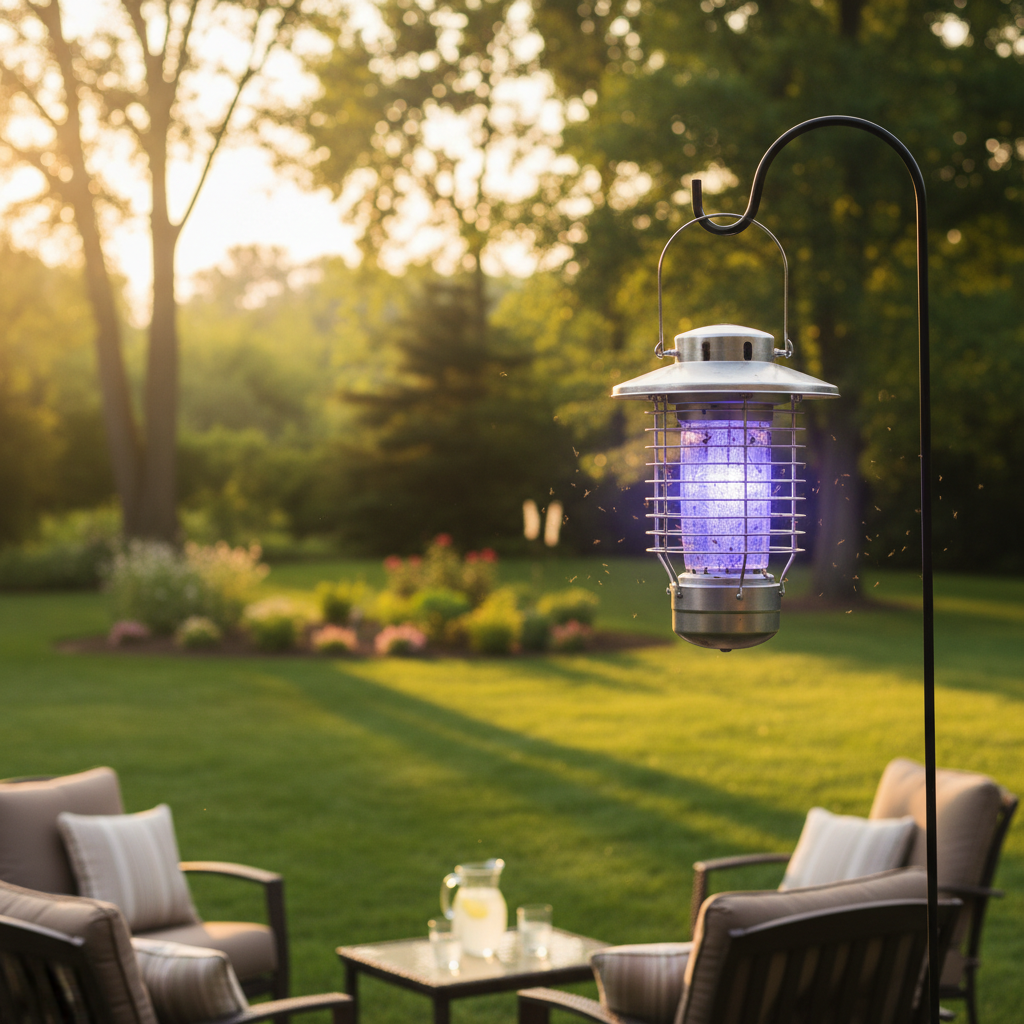
The relentless buzz of mosquitoes can quickly turn a pleasant evening into an irritating ordeal. Many homeowners, seeking respite from these persistent pests, turn to UV lamps, often marketed as mosquito killer lamps or bug zappers. These glowing devices promise a chemical-free solution, luring insects to an electrified grid with their alluring ultraviolet light. But do UV lamps truly live up to their reputation for effective mosquito control? The scientific truth, however, often paints a different picture than what marketing suggests, revealing that while effective for some insects, traditional UV-only zappers largely fall short when it comes to tackling mosquitoes.
What Are Mosquito Killer Lamps and How Do They Work?
Mosquito killer lamps, commonly known as bug zappers, are electronic devices designed to attract and eliminate flying insects. At their core, these devices consist of an ultraviolet (UV) light bulb surrounded by an electrified wire grid. The principle behind their operation is phototaxis, the natural behavioral response of many insects to light. Insects, particularly nocturnal ones, are drawn to specific wavelengths of light, including UV, which they may perceive as a natural navigational cue or a beacon. Once an insect flies towards the light and makes contact with the charged grid, it is instantly electrocuted, producing the characteristic “zap” sound.
There are various types, but the most traditional are those that rely solely on UV-A light for attraction. More advanced versions might incorporate additional features like carbon dioxide (CO2) or octenol lures, attempting to mimic the cues that mosquitoes actually use to find their prey. However, the fundamental design aims to exploit insects’ visual attraction to light to draw them into a lethal trap.
The Uncomfortable Truth: UV Lamps vs. Mosquitoes
Despite their widespread popularity and the satisfying zap they produce, traditional UV-only mosquito killer lamps are surprisingly ineffective at significantly reducing mosquito populations. Scientific studies and entomological research consistently highlight that these devices are not the silver bullet many believe them to be for mosquito control.
Why UV Light Isn’t a Primary Attractant for Mosquitoes
The core reason for their ineffectiveness against mosquitoes lies in what primarily attracts these blood-feeding insects. Mosquitoes are not primarily drawn to UV light. Instead, female mosquitoes, which are the ones that bite, are acutely sensitive to a complex cocktail of cues emitted by humans and other warm-blooded animals. Their primary attractants include:
- Carbon Dioxide (CO2): Released through breath, CO2 is a powerful long-range attractant, signaling the presence of a host.
- Body Heat: Mosquitoes can detect subtle changes in temperature, guiding them to warm bodies.
- Lactic Acid and Other Chemicals: Substances in human sweat, such as lactic acid, octenol, and other volatile organic compounds, act as close-range attractants.
|
Our Picks for the Best Mosquito killer lamp in 2026
As an Amazon Associate I earn from qualifying purchases.
|
||
| Num | Product | Action |
|---|---|---|
| 1 | Buzbug 50,000 Hrs Lifespan LED Bug Zapper Indoor, 3800V High-Voltage Indoor Fly Trap, 3 LED Bulbs Enhanced Dual-Band Attraction & Energy Saving, Electric Mosquito Killer for Gnats, Fruit Flies, Moths |

|
| 2 | YISSVIC Bug Zapper Outdoor Indoor Waterproof Electric Mosquito Lamp Fly Zapper Killer Effective 4200V Plug in for Home Patio Office Courtyard (One-Light Control Bug Zapper) |
|
| 3 | GOOTOP Bug Zapper Outdoor, Mosquito Zapper, 3 Prong Plug in Electric Fly Zapper, Mosquito Killer, Fly Traps, Flying Insects Zapper Indoor Outdoor, 4200V, ABS Plastic Outer (Black) |
|
| 4 | Electric Bug Zapper Indoor, Mosquito Zapper with 3500V Powerful Dual Grid & Remote, Fly Zapper Fly Trap Insect Killer for Patio Yard Home Kitchen Camping - Including 2 Replacement Bulbs (Black) |
|
| 5 | LUOJIBIE Bug Zapper Outdoor, Electric Mosquito Killer Fly Trap with UV/LED Light, 4200V High Voltage Waterproof Flying Insect Zapper for Backyard Patio, Indoor Mosquito Zapper for Home Garage |
|
| 6 | Bug Zapper Light Bulb, 2 in 1 Mosquitoes Killer Lamp Led Electronic Insect & Fly Killer, Porch Light for Entryway, Doorway, Corridor, Balcony and Patio (White) |
|
| 7 | Electric Bug Zapper Indoor/Outdoor, 4200V High Powered Mosquito Zappers Killer, Waterproof Insect Fly Swatter Zapper Mosquito Trap Outdoor, Fly Traps, Insect Killer for Home,Garden,Backyard, Camping |
|
| 8 | Bug Zapper Outdoor Indoor, Mosquito Zapper, Electric Fly Traps IPX4 Waterproof 20W Lamp Fly Insects Traps for Patio, Garage, Backyard, Porch |
|
| 9 | YISSVIC Bug Zapper Outdoor Indoor Waterproof Electric Mosquito Lamp Fly Zapper Killer Effective 4200V Plug in for Home Patio Office Courtyard |
|
| 10 | ASPECTEK Insect Killer, Bug Zapper, Powerful 20W Electronic Indoor Fly Zapper for Mosquito, Fungus Gnat, Asian Beetle, Moth, Flying Pests - Indoor Use, Includes 2-Pack Replacement Bulbs |
|
Traditional UV lamps fail to emit these crucial attractants, making them largely invisible or uninteresting to the very pests they are intended to eliminate.
Scientific Studies and Findings
Numerous studies have debunked the myth of UV lamps as effective mosquito killers. Research from institutions like the University of Notre Dame and the University of Delaware consistently shows that mosquitoes comprise a minuscule percentage of the insects killed by these devices. For example, some studies found that less than one-quarter of one percent, or typically between 4.1% and 6.4%, of the total insect catch in bug zappers were actually biting mosquitoes or gnats. Instead, the vast majority of victims are harmless or even beneficial insects.
One Iowa State University study indicated that bug zappers kill over 70 billion insects annually but have “no decipherable impact” on the mosquito population. This compelling evidence underscores that while bug zappers are adept at killing some flying insects, they are remarkably poor at targeting mosquitoes specifically.
The Harm to Beneficial Insects
Perhaps one of the most concerning drawbacks of traditional UV bug zappers is their detrimental impact on local ecosystems. Because they indiscriminately attract and kill a wide range of phototactic insects, these devices decimate populations of moths, beetles, lacewings, and other nocturnal species. Many of these non-target insects are beneficial – they may be pollinators, natural predators of other pests (including mosquito larvae), or a vital food source for birds, bats, and other wildlife. By disrupting these delicate ecological balances, widespread use of UV-only zappers can inadvertently create more problems than they solve, potentially leading to an increase in other pest populations or harming local biodiversity.
When UV Lamps Can Be Effective (and for What Else)
While traditional UV-only lamps are largely ineffective against mosquitoes, it’s important to clarify that they aren’t entirely useless. They do indeed kill other flying insects that are strongly attracted to UV light.
Bug zappers can be quite effective at controlling populations of:
- Moths: Many moth species are highly phototactic and readily drawn to UV light.
- Certain Flies: Smaller flies, gnats, fruit flies, and some types of house flies are also attracted to UV-A light and can be effectively captured.
- Midges (No-See-Ums): These tiny biting pests are often susceptible to UV light traps.
However, for genuine mosquito control, specialized devices that go beyond simple UV light are necessary. Some “advanced” mosquito traps integrate additional attractants to enhance their efficacy against mosquitoes. These often include:
- Carbon Dioxide (CO2) Emitters: By releasing CO2, these traps mimic human breath, a strong attractant for mosquitoes.
- Octenol Lures: Octenol is a chemical compound found in human breath and sweat that acts as a powerful mosquito attractant.
These combination devices are significantly more effective at luring mosquitoes than UV light alone, by tapping into their primary sensory cues.
Beyond the Buzz: More Effective Mosquito Control Strategies
Since traditional UV lamps are not the answer for mosquitoes, a comprehensive and integrated approach is essential. Effective mosquito control focuses on reducing breeding grounds, preventing bites, and using targeted elimination methods.
Eliminate Breeding Grounds
This is arguably the most crucial step. Mosquitoes lay their eggs in stagnant water. By removing or treating standing water around your property, you disrupt their life cycle.
- Drain standing water: Empty bird baths, pet water bowls, flowerpot saucers, clogged gutters, old tires, and any containers that can collect water at least once a week.
- Maintain pools and ponds: Ensure swimming pools are properly chlorinated and circulated. For ornamental ponds, consider mosquito dunks (containing Bacillus thuringiensis israelensis (BTI)), which kill mosquito larvae but are harmless to other wildlife.
Use Repellents
Personal repellents are highly effective for preventing bites when outdoors.
- DEET: A powerful and long-lasting repellent.
- Picaridin: Another effective and often preferred alternative to DEET.
- Oil of Lemon Eucalyptus (OLE) or PMD: A plant-based option for those seeking natural alternatives.
Physical Barriers
Creating physical barriers can keep mosquitoes away from living spaces.
- Window and door screens: Ensure they are intact and free of holes.
- Mosquito nets: For sleeping outdoors or in areas with high mosquito activity.
- Protective clothing: Wear long sleeves and pants, especially during dawn and dusk when mosquitoes are most active.
Consider Advanced Traps
If you opt for a trap, choose one specifically designed for mosquitoes that incorporates scientifically proven attractants.
- CO2 and Octenol traps: These devices, which may or may not include UV light, are engineered to mimic human hosts and draw in biting mosquitoes more effectively.
Professional Pest Control
For persistent or severe mosquito problems, professional pest control services can provide targeted solutions, including insecticide treatments and ongoing management plans. These experts can identify breeding sites and implement strategies that are tailored to your specific environment.
Choosing the Right Mosquito Control Solution
When selecting a mosquito control solution, it’s vital to make informed decisions based on scientific evidence rather than anecdotal experiences or marketing claims. If your primary goal is to reduce mosquito bites and populations, prioritize methods that target their actual attractants and breeding habits.
- Assess your needs: Consider the size of the area, the severity of the mosquito problem, and your budget.
- Research products thoroughly: Look for traps that explicitly state they use CO2, octenol, or other proven mosquito attractants, not just UV light.
- Read reviews: Seek out independent reviews and scientific evaluations.
- Embrace an integrated approach: No single solution is 100% effective. Combining multiple strategies—from source reduction to repellents and targeted traps—will yield the best results.
Remember that a clean environment, free of standing water, combined with personal protection, forms the bedrock of effective mosquito control.
Important Safety Considerations for Any Insect Control Device
While the focus has been on effectiveness, safety is paramount with any electrical or chemical insect control device.
- Placement: Position electrical zappers away from human activity areas (e.g., 20-25 feet from patios) to draw insects away from people. Ensure they are out of reach of children and pets.
- UV Light Exposure: While the UV-A used in most bug zappers is less harmful than UV-B or UV-C, prolonged direct staring into any intense UV light source should be avoided, as it can be irritating.
- Cleaning and Maintenance: Regularly clean any insect traps to maintain their efficiency. Dead insects can clog grids or reduce the effectiveness of sticky traps. For CO2/octenol traps, replace lures as recommended by the manufacturer.
- Chemical Lures: If using traps with chemical attractants, follow manufacturer instructions carefully for handling and replacement.
“The allure of the ‘zap’ is strong, but when it comes to mosquitoes, it’s often a false sense of security. Our research consistently shows that bug zappers are ecological traps, effectively killing the wrong insects and leaving the biting mosquitoes largely untouched.” – Dr. Timothy Frick, Entomologist
Conclusion
The truth is that while UV lamps are excellent at attracting and dispatching many flying insects, they are remarkably inefficient at killing mosquitoes. Traditional bug zappers, relying solely on ultraviolet light, largely miss their mark because mosquitoes are primarily drawn to carbon dioxide, body heat, and human scent, not just light. These devices often do more harm than good by indiscriminately killing beneficial insects that play vital roles in our ecosystem.
For truly effective mosquito control, a strategic and integrated approach is key. Focus on eliminating breeding sites, utilizing personal repellents, employing physical barriers, and considering advanced traps that incorporate scientifically proven mosquito attractants like CO2 and octenol. By understanding the science behind mosquito attraction, we can make informed decisions to protect our families and enjoy our outdoor spaces more effectively and responsibly. What steps will you take today to build a more effective mosquito defense strategy for your home?
Frequently Asked Questions
Do bug zappers attract more mosquitoes to my yard?
Traditional UV bug zappers do not effectively attract mosquitoes. Instead, they primarily attract and kill other flying insects like moths and beetles. Some studies suggest they might even draw other non-target insects into your yard, without significantly reducing the mosquito population that seeks out humans.
Are there any UV lights that do work for mosquitoes?
While UV light alone is poor at attracting mosquitoes, some advanced mosquito traps combine UV light with other powerful attractants such as carbon dioxide (CO2) and octenol. These combination devices mimic human cues more closely and are significantly more effective at luring and trapping mosquitoes.
What is the best way to get rid of mosquitoes naturally?
The most effective natural method is to eliminate all sources of standing water around your home to prevent mosquito breeding. Other natural strategies include using essential oil-based repellents (e.g., citronella, lemon eucalyptus oil), planting certain repellent plants (though their effectiveness is limited), and encouraging natural predators like bats and birds.