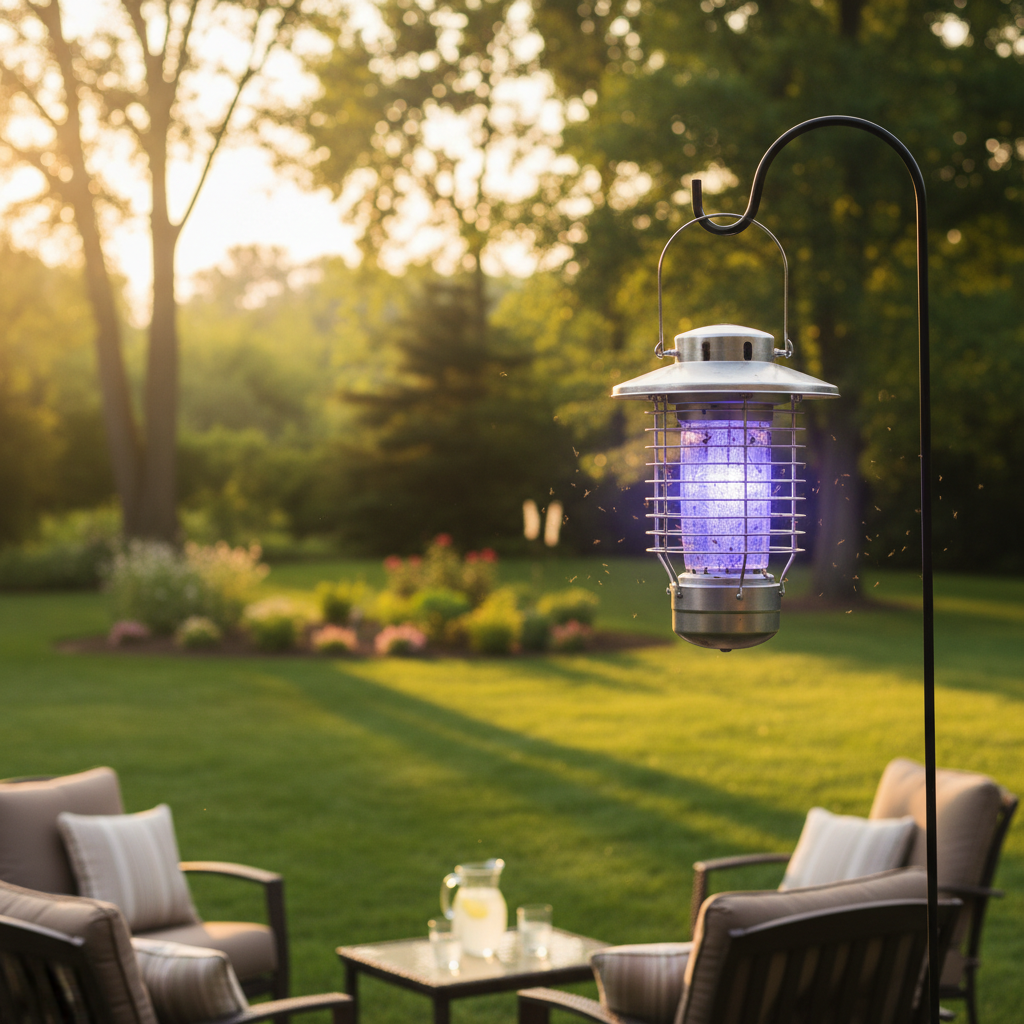
Mosquitoes, those ubiquitous buzzing nuisances, are more than just an annoyance; they are carriers of serious diseases like dengue, Zika, and malaria. In our quest to protect ourselves and our families, many of us turn to popular solutions, often involving the blue glow of a UV light bug zapper. But what if the very light we rely on to eradicate them is largely ignored by the mosquitoes we’re trying to catch? The truth about mosquito attraction to UV light is far more complex than common wisdom suggests, revealing why many traditional bug zappers fall short and what truly guides these persistent pests to their targets.
The Misconception of Mosquito Attraction to UV Light
The general public often believes that all flying insects, including mosquitoes, are drawn to ultraviolet (UV) light with equal fervor, much like moths to a flame. This widespread assumption has led to the popularity of UV light bug zappers, which promise to clear our outdoor spaces of these unwelcome guests. However, scientific research consistently shows that mosquitoes do not respond to UV light in the same way many other insects do. While short-wavelength light, such as blue or black light, does attract a wide array of insects, mosquitoes are notably less swayed by it [cite: 1 (search 1)]. This crucial distinction highlights a fundamental misunderstanding in many conventional mosquito control efforts.
What Really Attracts Mosquitoes? The Science of Sensing
Unlike many other insects that navigate primarily by light, mosquitoes employ a sophisticated array of sensory cues to locate their prey. Their survival hinges on efficiently finding warm-blooded hosts, and they have evolved specialized senses that go far beyond simple phototaxis.
Carbon Dioxide (CO2): The Primary Long-Range Beacon
|
Our Picks for the Best Mosquito killer lamp in 2026
As an Amazon Associate I earn from qualifying purchases.
|
||
| Num | Product | Action |
|---|---|---|
| 1 | Bug Zapper Light Bulb, 2 in 1 Mosquitoes Killer Lamp Led Electronic Insect & Fly Killer, Porch Light for Entryway, Doorway, Corridor, Balcony and Patio (White) |

|
| 2 | ASPECTEK Insect Killer, Bug Zapper, Powerful 20W Electronic Indoor Fly Zapper for Mosquito, Fungus Gnat, Asian Beetle, Moth, Flying Pests - Indoor Use, Includes 2-Pack Replacement Bulbs |
|
| 3 | Electric Bug Zapper Indoor/Outdoor, 4200V High Powered Mosquito Zappers Killer, Waterproof Insect Fly Swatter Zapper Mosquito Trap Outdoor, Fly Traps, Insect Killer for Home,Garden,Backyard, Camping |
|
| 4 | LUOJIBIE Bug Zapper Outdoor, Electric Mosquito Killer Fly Trap with UV/LED Light, 4200V High Voltage Waterproof Flying Insect Zapper for Backyard Patio, Indoor Mosquito Zapper for Home Garage |
|
| 5 | Bug Zapper Outdoor Indoor, Mosquito Zapper, Electric Fly Traps IPX4 Waterproof 20W Lamp Fly Insects Traps for Patio, Garage, Backyard, Porch |
|
| 6 | Buzbug 50,000 Hrs Lifespan LED Bug Zapper Indoor, 3800V High-Voltage Indoor Fly Trap, 3 LED Bulbs Enhanced Dual-Band Attraction & Energy Saving, Electric Mosquito Killer for Gnats, Fruit Flies, Moths |
|
| 7 | GOOTOP Bug Zapper Outdoor, Mosquito Zapper, 3 Prong Plug in Electric Fly Zapper, Mosquito Killer, Fly Traps, Flying Insects Zapper Indoor Outdoor, 4200V, ABS Plastic Outer (Black) |
|
| 8 | YISSVIC Bug Zapper Outdoor Indoor Waterproof Electric Mosquito Lamp Fly Zapper Killer Effective 4200V Plug in for Home Patio Office Courtyard (One-Light Control Bug Zapper) |
|
| 9 | Electric Bug Zapper Indoor, Mosquito Zapper with 3500V Powerful Dual Grid & Remote, Fly Zapper Fly Trap Insect Killer for Patio Yard Home Kitchen Camping - Including 2 Replacement Bulbs (Black) |
|
| 10 | YISSVIC Bug Zapper Outdoor Indoor Waterproof Electric Mosquito Lamp Fly Zapper Killer Effective 4200V Plug in for Home Patio Office Courtyard |
|
The most significant attractant for mosquitoes is carbon dioxide (CO2), the gas we exhale with every breath. Mosquitoes can detect CO2 plumes from remarkable distances, up to 100 feet away, making it their initial and most reliable signal for a nearby host [cite: 1, 4 (search 1); 1 (search 2)]. This chemical cue acts as an invisible trail, guiding them toward potential blood meals.
Body Odor and Sweat: Chemical Cues That Seal the Deal
Once within range, mosquitoes are further drawn in by the complex cocktail of chemicals emitted from human skin. Lactic acid, ammonia, and other compounds found in sweat and natural skin oils are powerful attractants [cite: 4 (search 1); 1 (search 2)]. These unique scent profiles help mosquitoes differentiate between individuals and confirm the presence of a host.
Body Heat: Infrared Detection for Close-Range Targeting
As a mosquito approaches its target, it switches to thermal sensing. Specialized heat sensors allow them to detect the subtle warmth of our skin, even beneath clothing [cite: 2, 4 (search 1)]. This infrared detection helps them pinpoint the precise landing spot for a bite.
Color Vision: How Mosquitoes “See” Their Next Meal
Recent research has added color vision to the list of mosquito attractants, particularly after they detect CO2. Studies show that once mosquitoes sense CO2, they are drawn to specific wavelengths of light: red, orange, and cyan, as well as black [cite: 1, 2, 3, 4, 5 (search 3)]. Human skin, regardless of pigmentation, reflects light in the red-orange range (>600 nm), making these colors highly appealing to mosquitoes [cite: 4, 5 (search 3)]. Conversely, in the presence of CO2, they tend to ignore green, blue, or purple hues [cite: 4 (search 3)].
Why UV Light Traps Fall Short
Given their sophisticated sensory priorities, it becomes clear why UV light traps are largely ineffective for mosquito control.
- Ineffectiveness: Numerous scientific studies have demonstrated the limited efficacy of UV bug zappers against mosquitoes. A notable study by the University of Florida’s Medical Entomology Laboratory found that a single UV trap collected over 10,000 insects in one night, yet only eight of them were mosquitoes [cite: 4 (search 4)]. This highlights a significant disparity between the perceived and actual effectiveness for mosquito control.
- Catching Non-Target Insects: The primary drawback of light-only bug zappers is their indiscriminate nature. They effectively attract and kill a wide range of nocturnal insects, many of which are harmless or even beneficial pollinators, without making a significant dent in the mosquito population [cite: 4 (search 4)]. This can have unintended negative consequences for local ecosystems.
- Importance of Complementary Attractants: For UV traps to achieve any measurable success with mosquitoes, they must be augmented with additional attractants that mimic natural cues, such as carbon dioxide or specific chemical lures like octenol [cite: 4 (search 1); 1 (search 2); 4 (search 4)]. Without these supplementary signals, UV light alone is simply not compelling enough for most mosquito species.
Species-Specific Responses: Not All Mosquitoes Are Alike
It’s also important to understand that not all mosquitoes behave identically. Their responses to light can vary significantly based on species, sex, and even the time of day [cite: 3, 5 (search 1)].
- Day-biting vs. Night-biting Mosquitoes: Day-biting species, such as Aedes aegypti (the yellow fever mosquito), are often attracted to a broad spectrum of light during daylight hours [cite: 3, 5 (search 1); 5 (search 4)]. In contrast, night-biting mosquitoes like Anopheles coluzzi (a malaria vector) tend to be strongly photophobic, actively avoiding short-wavelength light (UV and blue) during the day. However, their light avoidance decreases as dusk approaches [cite: 3, 5 (search 1); 2, 3 (search 3); 5 (search 4)].
- Varied UV Sensitivities: Different mosquito species also exhibit unique sensitivities to specific UV light wavelengths. For example, Anopheles stephensi and Culex quinquefasciatus show peak attraction to short wavelengths between 350-420 nm, particularly at 370 nm, while Aedes aegypti‘s peak sensitivity occurs around 400 nm [cite: 3 (search 3)]. This nuanced understanding is crucial for developing truly effective, species-specific trapping strategies.
Beyond UV: Effective Mosquito Control Strategies in 2026
Given the limitations of UV light, effective mosquito control relies on a multi-faceted approach that targets their true attractants and disrupts their life cycle.
Integrated Pest Management (IPM): A Holistic Approach
The most effective strategy is Integrated Pest Management (IPM), which combines several methods to manage mosquito populations sustainably. This includes understanding mosquito biology, habitat modification, and judicious use of control tools.
Source Reduction: Eliminating Breeding Grounds
Mosquitoes lay their eggs in stagnant water. Eliminating standing water sources around your home – such as in old tires, clogged gutters, bird baths, or poorly drained areas – is the most critical step in reducing mosquito populations [cite: 2 (search 2)].
Repellents: Protecting Yourself
Personal repellents containing active ingredients like DEET, Picaridin, or oil of lemon eucalyptus are highly effective when applied to skin and clothing. The market is also seeing innovations in controlled-release formulas and nano-emulsion technology for natural products, promising longer protection and enhanced efficacy [cite: 3, 4 (search 4)].
Advanced Trapping Technologies: Luring Them Effectively
Modern mosquito traps move beyond simple UV light. They often incorporate CO2 emission, heat, and synthetic scent lures that mimic human odors to effectively attract and capture mosquitoes. These traps are designed to exploit the very cues mosquitoes use to find us.
New Developments: Future-Forward Solutions
The year 2026 and beyond promise further advancements in mosquito control. “Spatial emanators,” for instance, are a relatively new class of products that distribute insecticides or repellents through the air for up to a year, without needing electricity or heat [cite: 1, 2 (search 4)]. These lightweight, affordable devices, recommended by the World Health Organization, are proving particularly useful in remote areas for preventing mosquito bites and reducing disease transmission [cite: 2 (search 4)]. Additionally, portable, passive devices using controlled-release repellents like transfluthrin are being developed, offering extended protection for weeks or months [cite: 5 (search 4)].
Choosing the Right Mosquito Control for Your Home
When selecting mosquito control solutions for your property, consider the following:
- Assess Your Needs: Evaluate the size of the area you need to protect and the severity of your mosquito problem. Different solutions offer varying coverage and intensity.
- Prioritize Multi-Modal Traps: If you opt for a trap, look for models that incorporate carbon dioxide, heat, and/or specific chemical lures in addition to (or instead of) UV light. These are significantly more effective at luring mosquitoes.
- Consider Spatial Protection: Newer technologies like spatial emanators can provide effective, long-lasting protection over an area without requiring direct application to the skin or electricity.
- Safety and Environmental Impact: Always choose products that are safe for your family, pets, and the environment. Consider non-toxic options and practices that minimize harm to beneficial insects.
“True mosquito control isn’t about blinding them with light, but outsmarting their intricate sensory systems. Understanding their biology is our strongest repellent.”
Important Safety Considerations for Mosquito Control
While striving for a mosquito-free environment, safety should always be paramount.
- Proper Use of Repellents: Always follow the instructions on repellent labels. Apply only to exposed skin or clothing, avoid contact with eyes and mouth, and supervise children’s use.
- Safe Operation of Traps: If using electric traps or those with chemical lures, ensure they are placed out of reach of children and pets.
- Avoiding Direct UV Exposure: If you are using UV light for other purposes (e.g., sterilization), avoid looking directly into the light for extended periods, as it can be harmful to your eyes.
Buying Guide: What to Look For in a Mosquito Killer Lamp (or Alternative)
Instead of a generic “mosquito killer lamp,” focus on devices that genuinely target mosquito biology.
- Mimic Natural Attractants: Look for traps that emit CO2 (from propane or other sources), heat, and specific synthetic lures (e.g., octenol, lactic acid) that replicate human breath and scent.
- Coverage Area: Match the device’s stated coverage area to the size of the space you want to protect.
- Safety Features: Ensure the product is designed with safety in mind, especially if used in areas accessible to children or pets.
- Ease of Maintenance: Consider how easy the device is to set up, clean, and replenish attractants or repellents.
- Reputable Brands: Invest in products from established manufacturers known for effective pest control solutions.
Conclusion
The notion that mosquitoes are universally drawn to UV light is a persistent myth that continues to misguide consumers in their efforts to achieve effective mosquito control. Scientific evidence unequivocally demonstrates that these pests are far more attuned to cues like carbon dioxide, body heat, and specific human odors, and even particular color wavelengths once a CO2 plume is detected. UV light alone proves largely ineffective, primarily zapping harmless insects rather than making a meaningful impact on mosquito populations.
As we move toward 2026 and beyond, the focus of effective mosquito management is shifting towards sophisticated, science-backed strategies. These include integrated pest management, diligent source reduction, and innovative technologies like CO2-enhanced traps, advanced repellents, and spatial emanators. By understanding the true science behind mosquito attraction, we can make informed choices, moving beyond the illusion of UV light to implement solutions that genuinely protect our families and communities. What steps will you take to create a truly mosquito-free environment this season?
Frequently Asked Questions
Do bug zappers attract mosquitoes?
Most traditional bug zappers, which rely solely on UV light, are not effective at attracting or killing mosquitoes. They primarily attract and eliminate other flying insects, many of which are harmless or beneficial. Mosquitoes are far more attracted to CO2, body heat, and certain odors [cite: 1, 4 (search 1); 1 (search 2); 4 (search 4)].
What colors repel mosquitoes?
Mosquitoes are generally attracted to colors in the red-orange spectrum, as well as cyan and black, especially after detecting CO2 [cite: 1, 2, 3, 4, 5 (search 3)]. While no color actively “repels” them in the same way a chemical repellent does, they tend to ignore green, blue, or purple in the presence of CO2 [cite: 4 (search 3)].
Are natural mosquito repellents effective?
Many natural mosquito repellents contain ingredients like oil of lemon eucalyptus or citronella. While some can offer a degree of protection, their effectiveness and duration can vary. Recent advancements in nano-emulsion technology are enhancing the efficacy of natural products against major vectors, making them a growing option for consumers [cite: 3 (search 4)].
What are spatial emanators?
Spatial emanators are a new class of insecticide or repellent products that release active chemicals into the air, creating a protective zone against mosquitoes. They do not require heat or electricity and can offer long-lasting protection (up to a year), making them a promising solution for various environments, including remote areas [cite: 1, 2 (search 4)].